Lawrence University’s Memorial Chapel will soon be undergoing an eagerly awaited restoration of the building’s impressive front façade bordering College Avenue. Work on the project, which entails replacing the entire front pediment and entablature, is targeted to begin between April 28 and May 4.
“For more than a century, Memorial Chapel has served as a vibrant cornerstone for both the Lawrence campus and the greater Appleton community,” said Lawrence University President Laurie A. Carter. “This restoration is not just an investment in our campus infrastructure, it is a commitment to preserving a shared space where our students and our neighbors can continue to gather, celebrate, and connect for many years to come.”
About the Chapel
Memorial Chapel began as a collaborative effort between Lawrence University and the Appleton community to create a gathering place and performance space for cultural, political, social, and major ceremonial events for both the campus and local community. A landmark of the Appleton historic district, the Chapel remains a vital part of campus and community life.
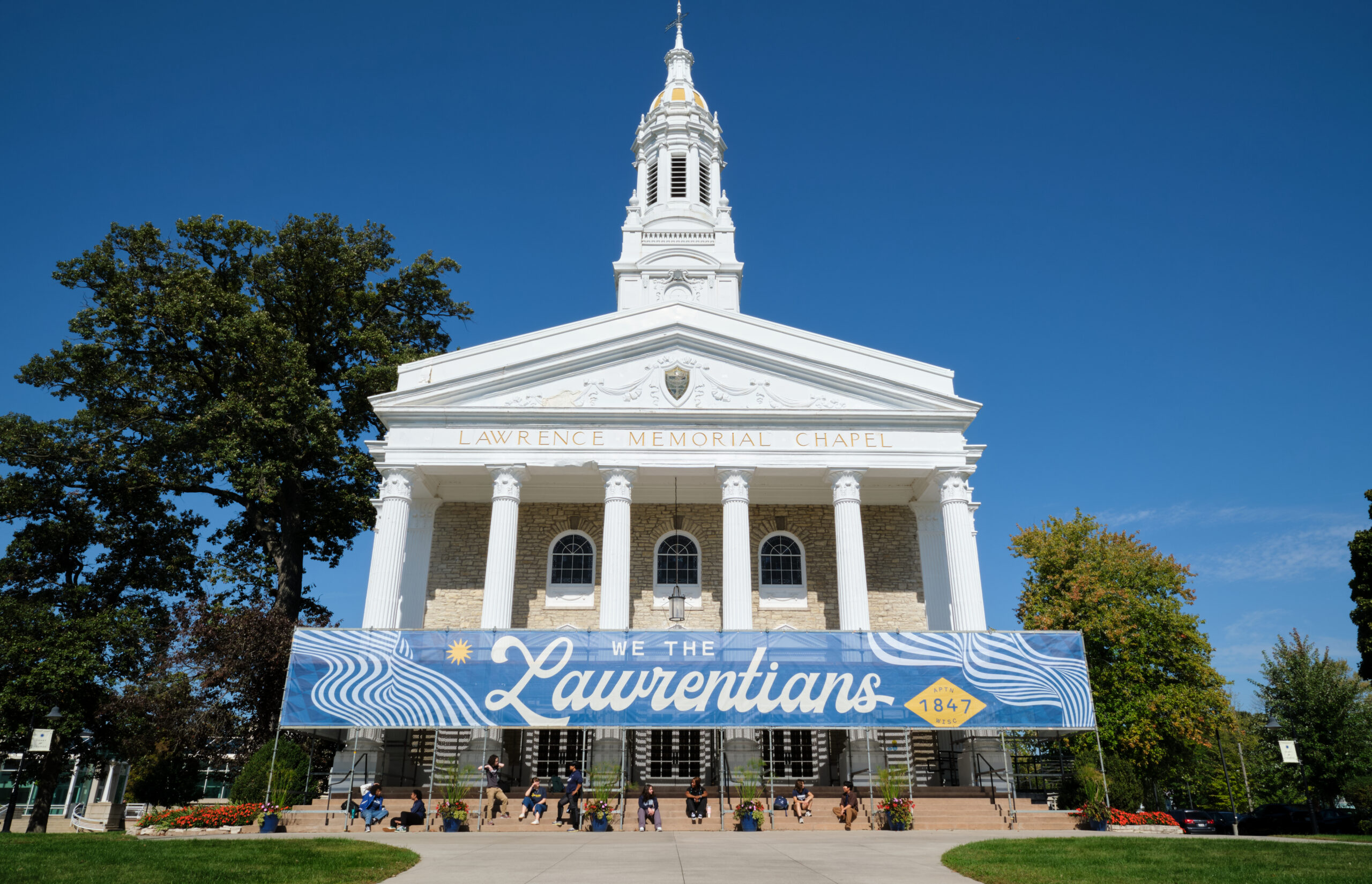
Designed by William J. Smith of Chicago and built by C.R. Meyer and Sons, Lawrence Memorial Chapel was dedicated in 1918. Its six majestic white columns and portico support an intricately decorated pediment and steeple. Eight exquisite stained-glass arched windows decorate the side walls with depictions of both religious and secular scenes along with the institutional seals of Lawrence and the City of Appleton.
This Appleton landmark has been lauded by the Wisconsin Historical Society as “perhaps the most distinguished example in Wisconsin of a Georgian Revival church structure,” and stands as a reminder of the enduring bonds between the campus and community.
“Memorial Chapel has served as the backdrop to countless community moments for more than 100 years,” said Vice President for Advancement Joe Emmick. “Embarking on this renovation will ensure the Chapel continues to be a valuable community resource for future generations.”
Scope of the Renovation
Memorial Chapel has been diligently maintained and improved over the decades. A magnificent 41-stop mechanical-action organ built by John Brombaugh, one of the world’s most distinguished organ builders, was installed in 1995. In more recent years, the Chapel’s flooring and seats have been replaced, HVAC and mechanicals upgraded, and new insulation added. The roof has been replaced, an accessible entrance updated, and all stained-glass windows repaired and restored. AV equipment upgrades and lighting and acoustic improvements have been made to enhance the guest experience.
Despite careful maintenance over the years, the 1,184-seat Chapel was due for major historic preservation to repair and restore it for the future. Unfortunately, wood rot affected the domed wooden belfry and spire, which led to roof leaks. Hidden water damage from the leaking caused a small portion of the front façade to chip off in 2024. For safety, netting and scaffolding were installed and will remain in place until the restoration is completed.
Weather, water damage, and age have led to significant deterioration of the Chapel façade. An architectural investigation recently confirmed the damage is beyond repair and that a full replacement of the front pediment and entablature is necessary. The project will include new sheet metal and flashing, refinished columns, repaired capitals, and a water management system to prevent future damage. The work is expected to be completed by early winter of 2027. Repairs to the belfry and spire will be addressed in a second phase of this historic preservation project.
A Unique Restoration Approach
The entire pediment and entablature of Memorial Chapel will be replaced with CastWorks® Glass Fiber Reinforced Concrete. GFRC is a lightweight but extremely durable material that can be cast into highly detailed structures. The material is watertight, but the glass fiber throughout the concrete mixture makes it much lighter, stronger, and more resilient to cracking and wear from environmental forces.
The entire pediment and entablature will be removed in sections and molds will be created for each section. The GFRC mixture will be applied to the mold, allowing the original architectural details to be meticulously replicated, and a steel framing attachment will be applied to the back. The individual panels will then be installed on the building. Once all panels are in place, the entire façade will be finished and sealed.
“It is exciting to have the restoration work get underway for a building that has been such an integral part of campus and community life for so long,” said Senior Vice President of Facilities Operations Joseph M. King. “We look forward to seeing this historic building free of the scaffolding that has enshrouded it to reveal a beautifully restored structure.”