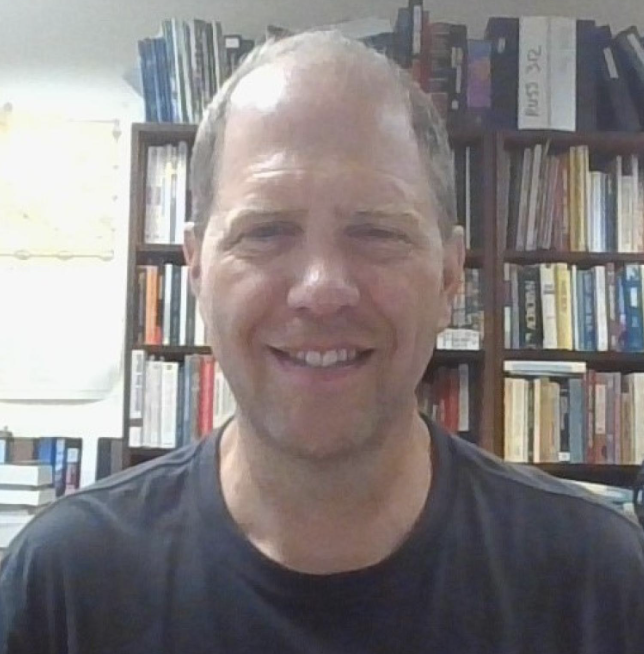
Peter Thomas received both his BA degree in comparative literature and PhD in Russian from Northwestern University. He studied at the Moscow State University for over a year where he received training in how to teach Russian to non-native speakers. Then after a few years of practicing his newly honed skills on students at St. Olaf and Beloit, in 2006 he was hired by Lawrence to be its professor of Russian Studies. During his twenty-year tenure, he has been dedicated to assuring that his students succeed, and clearly they have greatly benefitted from his nurturing and supportive style of teaching. And so too have the many lifelong learners at Bjorklunden! Peter has led summer seminars over the past 16 years sharing his wide knowledge and deep love of Russia and its culture.
How easy was it for you to connect with seminar participants during the first few summer sessions?
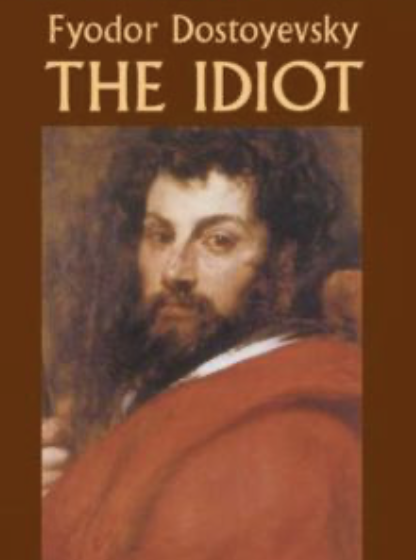
From the very beginning it has been easy to connect with seminar participants. They are warm, curious, and enthusiastic about learning. For me, the real challenge was figuring out how much we can really do in one week. My first seminar was on Dostoevsky. I called our session The Idiot, for the novel we were reading. We all had name tags. Mine read “Peter Thomas, The Idiot.” That was fitting because I assigned a 600-page novel of material that is not exactly beach reading. I’ve since learned to better gauge the reading I ask participants to do before our session and during the week.
I think my sessions have a reputation for being rather hard-core; people show up having read everything I asked or even suggested. Our seminars are very much discussion-based, so anyone who wants to spend a week talking about Russian culture is welcome. We do a lot of reading aloud during the week. That has been an evolving part of my seminars. I’m really excited about how much fun it is and how much more we get out of the texts.
How would you compare older lifelong learners with your on-campus students?
University students have reasonable concerns about grades and their prospects for the future. In many cases, I have to teach them basic study and time-management skills that have nothing to do with the materials, but if I don’t teach them those things, they will learn much less. These students have relatively little experience in life, and for the most part their experiences are similar to each other’s. A big part of what I have to teach them is that: life and the world are much, much bigger and more complicated than they suspect. That is enjoyable, so long as the student (and family) are on board. With summer participants, I am the inexperienced one in the room. I am fairly certain that I learn as much each summer as they do. Participants bring such a wide range of skills, talents, and experiences to our sessions that my job is to just facilitate a conversation around whatever we are working on at the time. When I have done my job in choosing a good topic, the course takes on a life of its own. And I don’t have to grade anything or anyone.
Was it challenging to get us to refrain from discussing current political events all the time?
Russian politics is always a part of the discussion, and that is to be expected. Conversations about politics in the US tend to be a part of conversations over meals, but not always. The materials we work on have a lot to say about how people treat each other and the world we share. I am careful not to let the conversation derail for political reasons. That is much easier to do with seminar participants than with university students.
Do you cover political history? Why or why not?
I have taught two seminars on political history in Russia. I would certainly do so again. Speaking honestly, for many years now I have left the topic of the next year’s seminar to the participants in the current one. I trust them to choose topics that will attract new participants.
Do you wish participants had better geographical background?
No. Figuring out how to capture the topography, flora, fauna, and meteorology of whatever region we are working on is a part of the fun. I do wish that I had a strong geographical background. Some of my regular participants are incredibly well-travelled and have been to places I have only seen online.
What seminar topic have you enjoyed presenting the most?
I have never had a seminar that didn’t feel like my favorite while I was teaching it. I love teaching “The Russian Short Story.” I’ve taught Pushkin’s Eugene Onegin and Tolstoy’s Anna Karenina twice, and each time was a revelation for me. The sessions on Gogol, Bulgakov, Nabokov, Aleksievich, and Putin were challenging and invigorating. Last summer’s class on film and literature was so much fun that it felt like I was a student, not the teacher. This summer, in response to a story and film from last summer, we are reading Chekhov, one of my favorite authors. I cannot wait to prepare that class.

Plans are being created to do a “Great Books” program during the 2027 summer featuring three Freshman Studies books taught over the years and you have been asked to participate. Can you share some of the preliminary plans?
This is a team-taught course called “The Long Novel” that Professor Dominica Chang of French, Professor Tim Spurgin of English, and I have taught at Lawrence four times now. The central problem of the class is thinking about how the different traditions in European literature of the nineteenth century represent the challenges of modernity. The first three times we taught the course, we read Charles Dickens’ David Copperfield, Gustave Flaubert’s Sentimental Education, and Fyodor Dostoevsky’s The Brothers Karamazov. We are just completing our first run through a new version that features Flaubert’s Madame Bovary, Lev Tolstoy’s Anna Karenina, and Thomas Hardy’s Tess of the D’Urbervilles. The key to this class is that all three of us are at every discussion, and we each take one session as lead instructor for the books that are outside of our own field. The other key is that these are long and complicated novels. We are talking about how we would create a two-week class with the same or similar authors and the same topics, but with fewer than 1700 pages of reading. A challenge!