
Program Overview
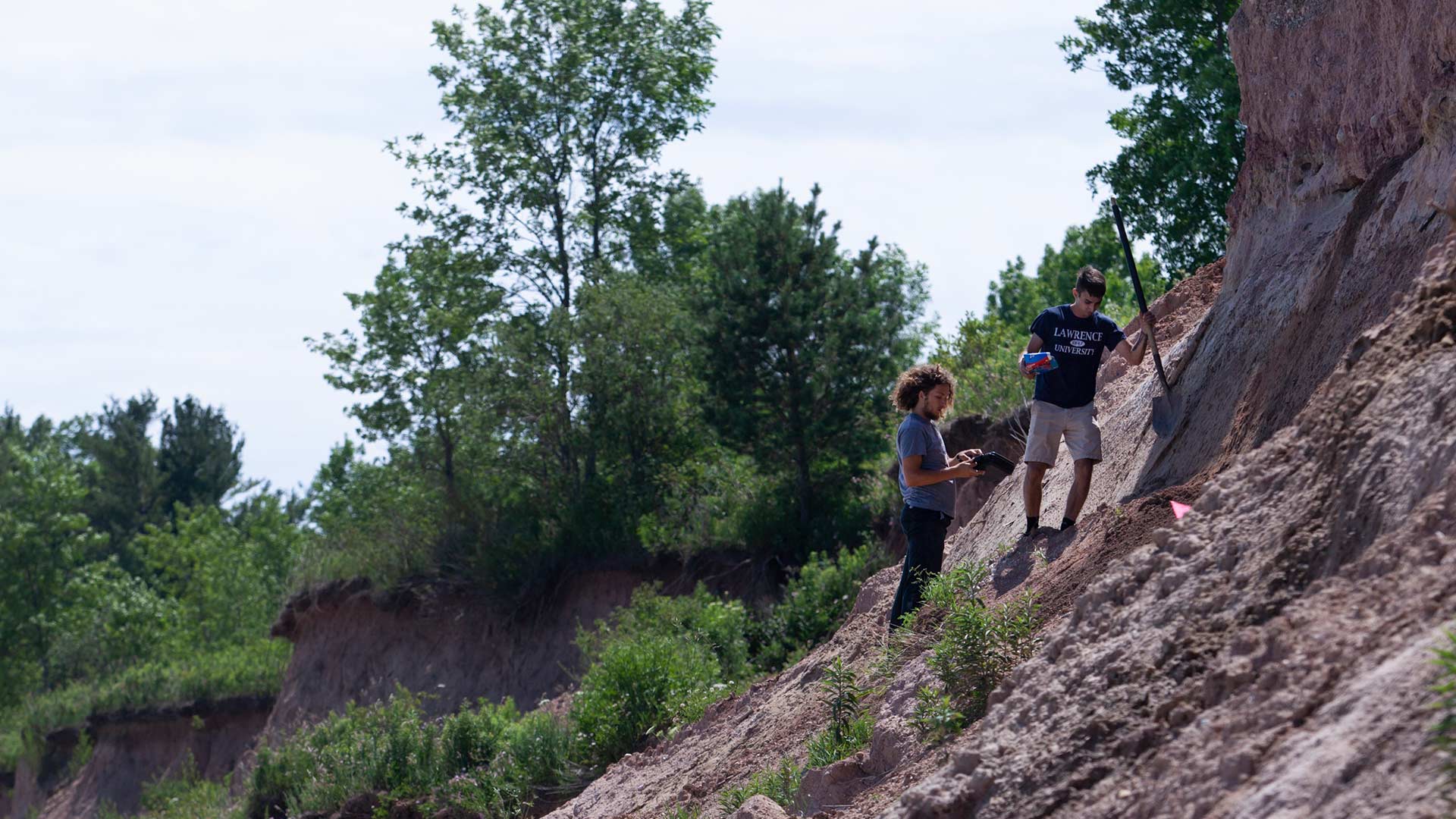
The Geosciences program at Lawrence combines hands-on research with a strong liberal arts foundation. Students explore topics from mountain building over deep time to contemporary water and soil quality issues while working closely with faculty in small classes, labs, and in the field. Opportunities for independent research and interdisciplinary study help students connect scientific theory to real-world challenges. Graduates are prepared for graduate work in the earth and environmental sciences and for a wide variety of career paths, including natural resources, environmental protection, and environmental education.
Program Highlights
Build Skills in the Field and Lab
Gain real-world experience early through intensive fieldwork and laboratory learning built into your geoscience courses.
Lead Your Own Research
Develop a research question, choose an appropriate methodology, analyze data, and present your findings through Senior Experience.
Work Closely with Faculty
Benefit from small classes, personalized faculty guidance, and early opportunities to contribute to faculty-sponsored research.
Spotlight

LAWRENTIAN SPOTLIGHT
Student Perspective
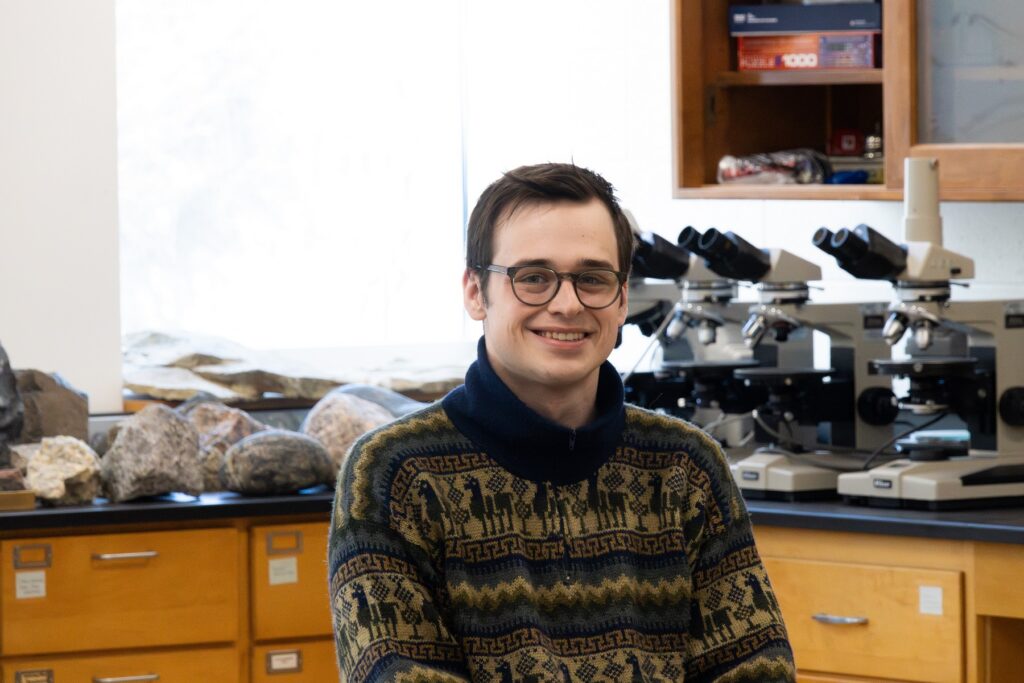
“The approach to learning in the Geosciences Department is very commendable. We’re kind of all in it together, and you get to ask really interesting questions.”
Zachary Hogan ’26
Geosciences
Warrenville, Illinois
Types of Degrees
Students can pursue a Bachelor of Arts in Geosciences and a minor. Students also frequently cross over into interdisciplinary programs such as Environmental Science.
Advising
At Lawrence, academic advising helps you shape an educational experience that reflects your interests, goals, and aspirations. Your faculty advisor will support you as you plan your path, connect with campus resources and communities, and make informed decisions that prepare you for a meaningful and fulfilling future.

Faculty
Engage deeply and collaboratively with professors who are experts in their field and committed to supporting your education.
Chair(s)

Jeffrey J. Clark (he, his)
Professor and Chair of Geosciences
My research explores human interactions with the physical environment, both how humans shape Earth’s surface, and how natural processes have shaped human habitation. I’ve looked at sediment storage changes in…
View Full ProfileAll Faculty

Marcia Bjornerud
Walter Schober Professor of Environmental Studies and Professor of Geosciences
Marcia Bjornerud is a structural geologist whose research focuses on the physics of earthquakes and mountain building. She combines field-based studies of bedrock geology with quantitative models of rock mechanics.…
View Full Profile Jeffrey J. Clark (he, his)
Professor and Chair of Geosciences
My research explores human interactions with the physical environment, both how humans shape Earth’s surface, and how natural processes have shaped human habitation. I’ve looked at sediment storage changes in…
View Full Profile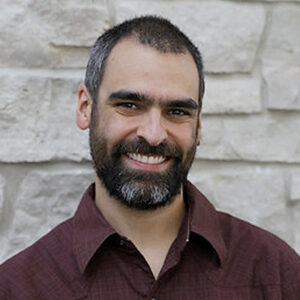
Andrew Knudsen
Professor of Geosciences
Interests: environmental mineralogy, low-temperature geochemistry
View Full Profile
Relena R. Ribbons (she/her/hers)
Associate Professor of Geosciences
Dr. Ribbons is a forest and soil ecologist, and biogeochemist in the Geosciences Department and Environmental Studies program. Her interests range span soil microbial ecology, geobiotic interactions, and ecosystem ecology. She…
View Full Profile
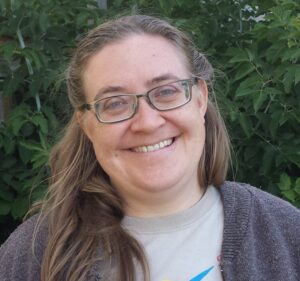
Deanna L. Donohoue (she/her)
Associate Professor of Chemistry
deanna.l.donohoue@lawrence.edu
Her research has included work on the gas phase oxidation of mercury in the atmosphere, halogen chemistry of the arctic and the use of remote sensing, and the impacts of…
View Full ProfileLearning Spaces
Students will enjoy access to state-of-the-art geochemical and petrological research labs with XRD, pXRF, and petrographic microscopes. Additional shared facilities with chemistry and biology also enable soil and water testing. A dedicated physical modeling lab allows students to run controlled experiments at greatly reduced temporal and spatial scales. Lastly, a suite of sUAV cameras allows the collection of real-time 3D landscape data using visible, thermal, and infrared sensors.
