
Program Overview
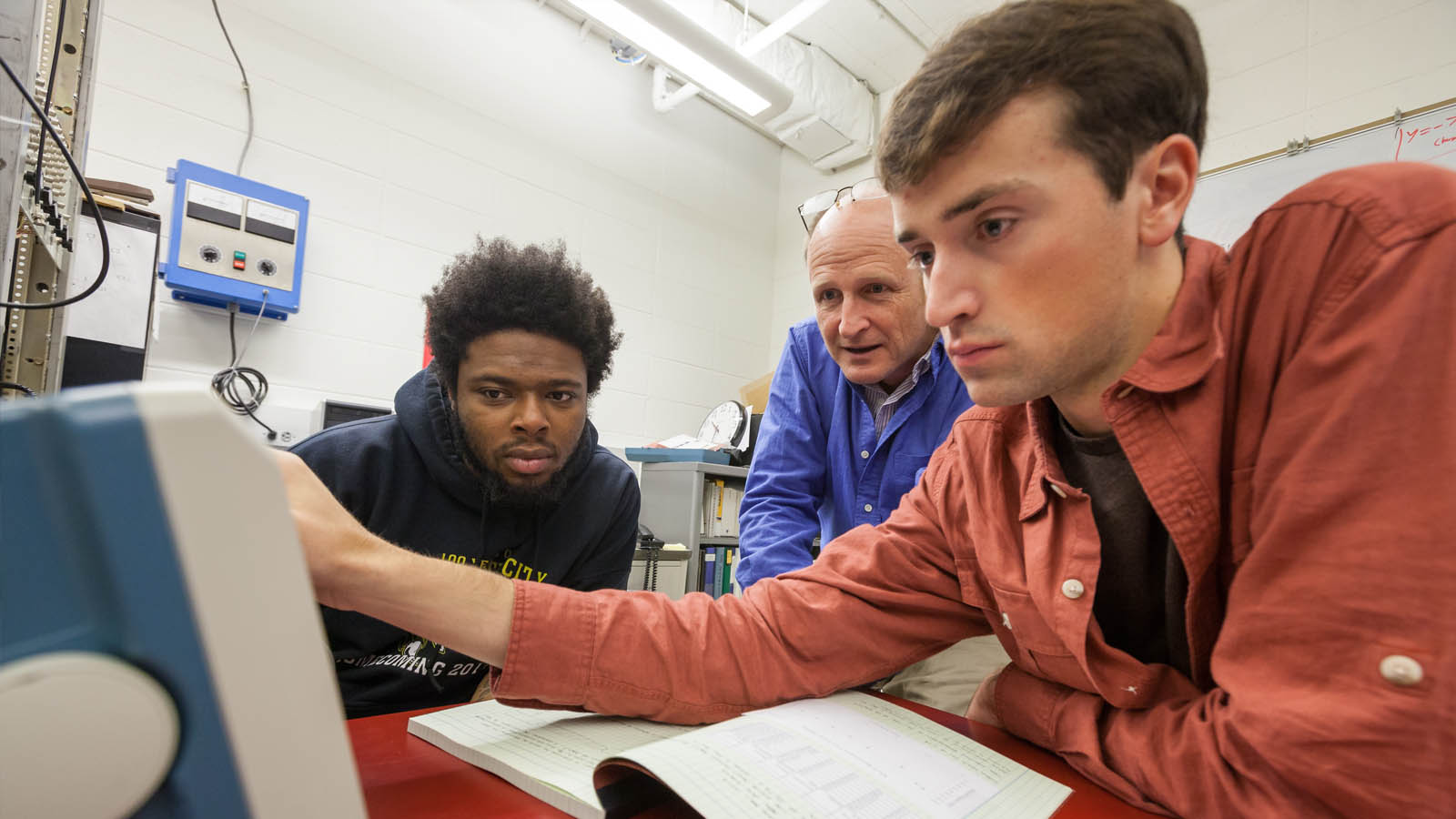
The Physics program at Lawrence uses hands-on labs, computer simulation, and small classrooms to explore the nature of the universe. What gives stars their color? How do we weigh the Earth? What is a quantum computer and how do we build one? What is light? Students work with research-active professors to explore questions like these and use the answers to effect change in the world. Graduates go on to PhDs at top universities (MIT, Cornell, Washington), to careers in engineering, and to work in quantitative fields like medical physics, finance, and software engineering.
Program Highlights
Work with Research-Grade Equipment
Gain hands-on experience with advanced equipment in the classroom, then apply your skills through faculty-led summer research.
Build a Path to Engineering
Access dual-degree bachelor’s and master’s engineering pathways through partnerships with Columbia University and Washington University.
Learn Through Collaboration
Work alongside supportive peers and faculty in an environment centered on shared discovery rather than competition.
Fund Your Own Research
Pursue substantial funding for student-designed projects that allow you to investigate questions that matter to you.
Types of Degrees
Students can pursue a Bachelor’s in Physics with options for dual-degree (BA/MS) in engineering and a physics / broad science teaching certification. A minor in Physics is also available. In addition, many students double major in Physics and Math, Physics and Music, Physics and Computer Science.
Advising
At Lawrence, academic advising helps you shape an educational experience that reflects your interests, goals, and aspirations. Your faculty advisor will support you as you plan your path, connect with campus resources and communities, and make informed decisions that prepare you for a meaningful and fulfilling future.

Faculty & Staff
Engage deeply and collaboratively with professors who are exclusively devoted to supporting your education.
Chair(s)
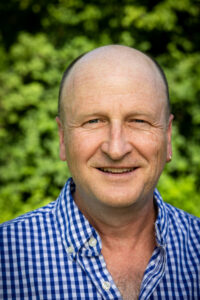
Matthew R. Stoneking (he/him)
Alice G. Chapman Professor of Physics
matthew.r.stoneking@lawrence.edu
I am an experimental plasma physicist. My research interests focus on magnetic confinement of pure electron plasma, and on the creation of electron-positron plasma. I design, construct, and conduct experiments…
View Full ProfileAll Faculty & Staff
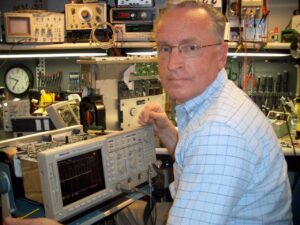
LeRoy Frahm
Electronics Technician
LeRoy came to Lawrence in 1975. He has broad experience in electronics, from electronic tubes to solid state and surface mounted-technology. He has built and designed electronic equipment, physics…
View Full Profile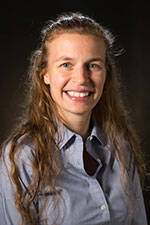
Margaret Koker (she/her/hers)
Assistant Professor of Physics
I use x-ray techniques to study materials, their composition, and their behavior. I combine experimental tools with computational modeling and data analysis methods to describe material characteristics. My interest in…
View Full Profile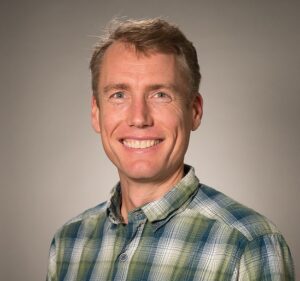
Douglas S. Martin (he/him)
Professor of Physics
I’m a biophysicist, using physics to understand the foundations of living systems. I spend most of my time on microscope development and on studying the skeleton of biological cells, both…
View Full Profile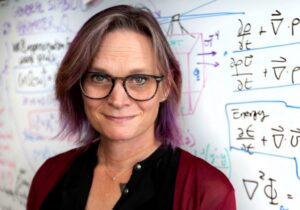
Megan Pickett (she/her)
Associate Professor of Physics
“I believe physics is for everyone, and everyone can do physics.”
View Full Profile
Matthew R. Stoneking (he/him)
Alice G. Chapman Professor of Physics
matthew.r.stoneking@lawrence.edu
I am an experimental plasma physicist. My research interests focus on magnetic confinement of pure electron plasma, and on the creation of electron-positron plasma. I design, construct, and conduct experiments…
View Full ProfileLearning Spaces
Students learn in integrated classroom-lab spaces, where theory is immediately tested through experiments. The first year involves collaborative lecture-lab learning as well as experimental electronics; the second year involves the Computational Physics Lab to directly integrate computation into their understanding; the third year involves the Advanced Laboratory, where students learn to use research equipment; and the fourth year involves independent, student-designed, and funded research.
