

Program Overview
Want to understand how the world works? In economics, we build models and analyze data to understand how people make choices and how economies function.
Economics covers a wide variety of topics and our tools influence decision makers in governments, businesses, and other organizations. Students develop models that explain the world and use data and statistical analysis to test which ideas are likely right or wrong. Along the way, you gain useful technical skills in a STEM-designated program. Because economics tools are broadly applicable, graduates are prepared for careers in government, business, consulting, law, and many other fields.
Program Highlights
Prepare for What Comes Next
Build a strong foundation for careers across industries or continued study in graduate and professional programs.
Connect Economics Across Fields
Pair economics with programs such as Business & Entrepreneurship, Data Science, Global Studies, Environmental Studies, and many other areas of study.
Develop Versatile Analytical Skills
Strengthen your abilities in mathematical modeling, data analysis, critical reading, and clear, persuasive writing.
Spotlight

Lawrentian Spotlight
Student Perspective
“The economics program is extremely well-managed. Mixing the liberal arts education with economics, how they teach, helps a lot. You learn a whole new way to learn, which is extremely helpful in the long term.”
Giacomo Bocanegra ’25
Economics
Trujillo, Peru

Types of Degrees
Students can pursue a Bachelor of Arts in Economics, with an option to pursue a Mathematics-Economics major. Many students double major, pairing Economics with Business and Entrepreneurship, Government, Data Science, or other fields. A minor in Economics is also available.
Advising
At Lawrence, academic advising helps you shape an educational experience that reflects your interests, goals, and aspirations. Your faculty advisor will support you as you plan your path, connect with campus resources and communities, and make informed decisions that prepare you for a meaningful and fulfilling future.

Faculty
Engage deeply and collaboratively with faculty who are experts in their field and committed to supporting your education.
Chair(s)

Dylan B. Fitz
Associate Professor of Economics
I teach courses in development economics, the economics of altruism and effective altruism, economic growth, poverty traps, Latin American economic development, and advanced econometrics.
View Full ProfileAll Faculty
-
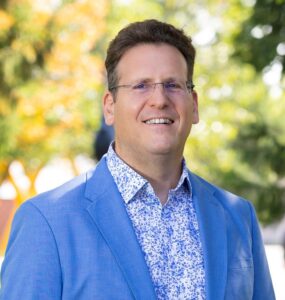
Adam Galambos (he/him)
Dwight and Marjorie Peterson Professor of Innovation and Professor of Economics
My research experience is in microeconomic theory and game theory, and these are fields that I teach as well. I also enjoy teaching in the Innovation and Entrepreneurship program. I…
View Full Profile -

David Gerard (He, him, his)
John R. Kimberly Distinguished Professor of the American Economic System and Associate Professor of Economics
I am the John R. Kimberly Distinguished Professor in the Department of Economics. A number of my courses are cross-listed in Environmental Studies, Government, Business, and Innovation & Entrepreneurship. My…
View Full Profile -
Dylan B. Fitz
Associate Professor of Economics
I teach courses in development economics, the economics of altruism and effective altruism, economic growth, poverty traps, Latin American economic development, and advanced econometrics.
View Full Profile -

Hillary Caruthers
Associate Professor of Economics
hillary.caruthers@lawrence.edu
My interests include Economic Development, Labor Migration, Global Nutrition and Health, and Southeast Asian Studies.
View Full Profile -
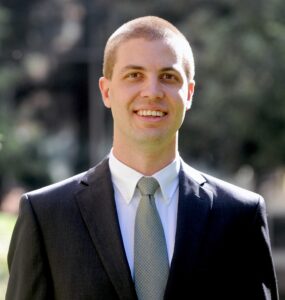
Jonathan Lhost (he)
Associate Professor of Economics
Interests: Econometrics, Data Science, Industrial Organization, Game Theory, Microeconomics
View Full Profile -

Van Nguyen (She/Her/Hers)
Assistant Professor of Economics
I joined the Department of Economics at Lawrence University of Wisconsin in the fall of 2022 as an Assistant Professor. My research interests include Measurement of Money Supply, Monetary Policy,…
View Full Profile
Learning Spaces
Economics majors take core theory courses together, often working on projects and attending drop-in tutoring sessions in our Economics Lab. Students work closely together and get to know their professors through small and challenging courses.
